





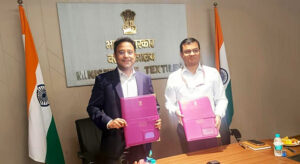


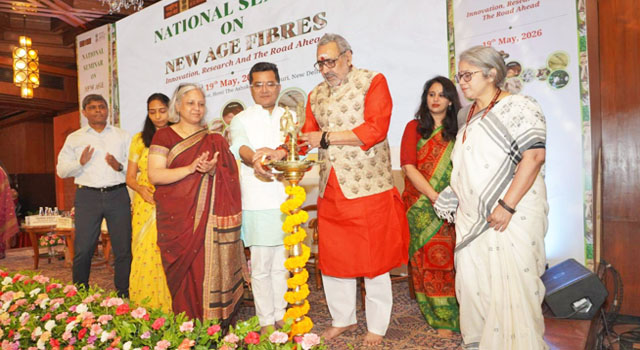




India’s sustainable textile revolution received a major boost as Giriraj Singh, Union Minister of Textiles, inaugurated the National Seminar on “New Age Fibre: Innovation, Research and the Road Ahead” in New Delhi. Organized by the Ministry of Textiles through the National Jute Board, the seminar brought together policymakers, industry leaders, researchers, startups, innovators, and academic experts to chart the future of sustainable and eco-friendly fibres in India’s textile industry.
The event highlighted the Government’s strong focus on innovation, sustainability, circular economy practices, and self-reliance in the fibre ecosystem. The seminar was attended by Pabitra Margherita, Minister of State for Textiles, Neelam Shami Rao, senior government officials, and key industry stakeholders, reflecting a unified vision to position India as a global hub for sustainable textiles and next-generation natural fibres.
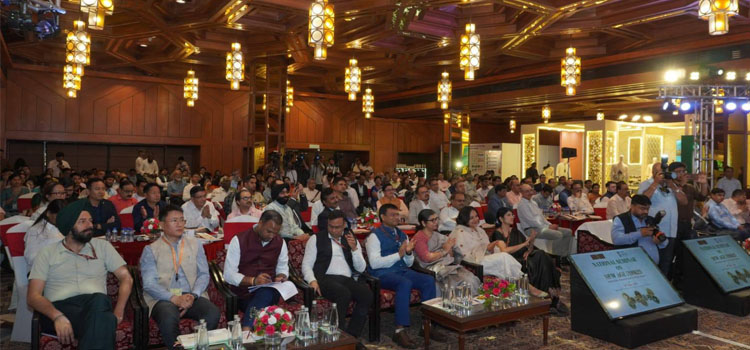
The seminar placed significant emphasis on the growing potential of new-age natural fibres such as pineapple fibre, flax fibre, milkweed fibre, bamboo fibre, hemp fibre, nettle fibre, banana fibre, ramie fibre, and kapok fibre. These biodegradable and environmentally friendly fibres are emerging as sustainable alternatives to conventional materials and are increasingly gaining global demand due to their low environmental footprint and versatile applications across textiles, fashion, composites, handicrafts, and technical textiles. Experts highlighted that the promotion of these fibres can create large-scale rural employment opportunities, encourage agricultural diversification, improve farmers’ incomes, and strengthen India’s position in the rapidly expanding global sustainable fashion and eco-textile market.
The programme commenced with the inauguration of the “New Age Fibres Expo” by Union Minister Giriraj Singh, where innovative products, fibre technologies, and sustainable textile applications were showcased. The exhibition demonstrated how natural fibres are being transformed into high-value products through technological innovation and industry collaboration. Addressing the gathering, Shashi Bhushan Singh, Secretary of the National Jute Board, emphasized that India’s diverse agro-climatic conditions provide an ideal ecosystem for scaling up the cultivation and processing of sustainable fibres. He noted that new-age fibres have the potential to become a key pillar of India’s green textile economy while simultaneously supporting rural livelihoods and environmentally responsible industrial growth.
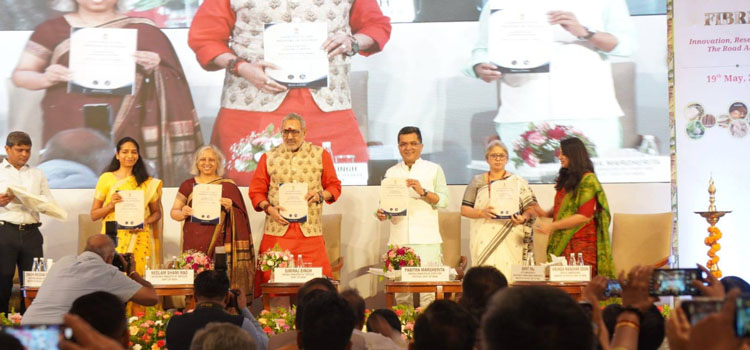
A key highlight of the event was the launch of the “New Age Fibres” booklet along with the release of detailed reports prepared by three dedicated Task Forces on emerging fibres. These reports are expected to play a critical role in shaping a structured roadmap for the sector. In her keynote address, Padmini Singla, Joint Secretary (Fibre), Ministry of Textiles, highlighted the growing international demand for biodegradable materials and sustainable textile solutions. She stressed that India must leverage its natural resources, research capabilities, and manufacturing strength to become a global leader in eco-friendly fibres and sustainable textile innovation.
The seminar featured four thematic sessions focused on policy development, entrepreneurship, technological innovation, and long-term strategic planning. The first session, “Foundational Framework: Building the NAF Blueprint,” explored cultivation practices, fibre extraction technologies, supply chain gaps, institutional coordination, and policy support needed for scaling up new-age fibre production. Experts underlined the need for research-backed frameworks, quality standardization, farmer training, and infrastructure development to build a robust ecosystem for sustainable fibres.
The second session, “The Entrepreneurial Edge: Real-World Models for NAF Growth,” showcased successful business models and innovations developed by startups and industry leaders in areas such as bamboo composites, hemp textiles, milkweed applications, pineapple leaf fibre (PALF), ramie processing, and banana fibre products. Discussions highlighted the importance of private sector participation, technology adoption, market linkages, and brand development in accelerating the commercialization of new-age fibres and attracting investments into India’s sustainable textile sector.
The third session focused on solving techno-commercial challenges associated with fibre extraction, processing efficiency, machinery development, logistics, quality consistency, and supply chain integration. Experts from research institutions and industry stressed the importance of strengthening R&D, promoting cluster-based processing models, enhancing farmer awareness, and fostering collaboration between the agriculture and textile sectors to overcome current barriers.
The final session, “The 2030 Roadmap: A Strategic Plan for NAF Evolution,” outlined a comprehensive vision for integrating new-age fibres into India’s mainstream textile economy. Policymakers and industry experts emphasized the need for strong policy support, export promotion, global certifications, value-added manufacturing, and sustainable branding to position India as a leading destination for eco-friendly textiles by 2030. The recommendations and deliberations from the seminar are expected to form the foundation of a future-ready New Age Fibre policy framework aimed at boosting innovation, strengthening sustainable value chains, and enhancing India’s competitiveness in the global green textile market.
Subscribe our WhatsApp Channel FREE to get regular updates – Click here
Enlist your name FREE in Apparel Manufacturers Directory – Click here


