





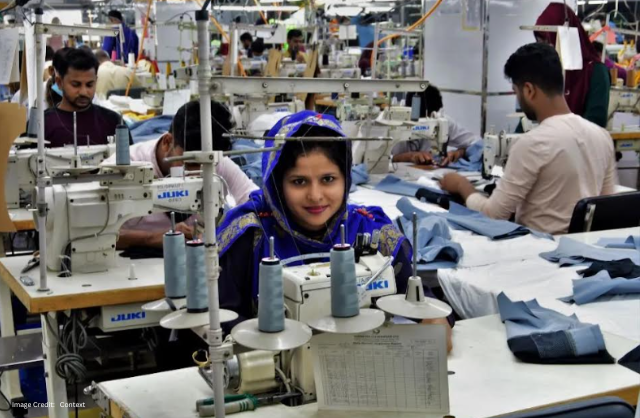
A recent study conducted by the Anker Research Institute (ARI) sheds light on concerning gender pay gaps within Bangladeshi garment factories. According to the findings, these factories exhibit a substantial gender pay gap, with men enjoying up to a 30% advantage in base wages.
The study, titled ‘Gender Pay Gaps in Global Supply Chains,’ compared wage differentials across various countries including Bangladesh, Colombia, Morocco, Thailand, and Turkey. While Turkish apparel factories showed smaller but variable gaps of 4 to 17%, Bangladeshi factories displayed a significant 22 to 30% disparity in base wages favoring men.
Alarmingly, the research revealed that women in Bangladesh and Turkey’s garment industry earned less than their male counterparts for equivalent work. This discrepancy arises as men often negotiate higher base wages or shift to better-paying roles within factories.
In Bangladesh, the study analyzed three garment factories employing between 1,500 to 4,000 workers each. It found that while men typically work slightly more days per month in Colombia and Turkey, women are more likely to put in additional workdays in Thailand and Bangladesh.
ARI’s comprehensive analysis involved payroll data from approximately 15,000 workers across 12 factories in the five countries, supplemented by over 360 interviews with stakeholders, workers, and managers.
The institute calls for immediate action to address these disparities, advocating for employers to monitor wages across genders and actively work towards reducing or eliminating gender-based pay gaps. Furthermore, it urges governments, brands, industry bodies, and trade unions to conduct thorough evaluations of worker wages to ensure equitable pay for equal work.
It’s imperative that stakeholders come together to enact meaningful change, promoting fairness and gender equality within the garment industry.


