



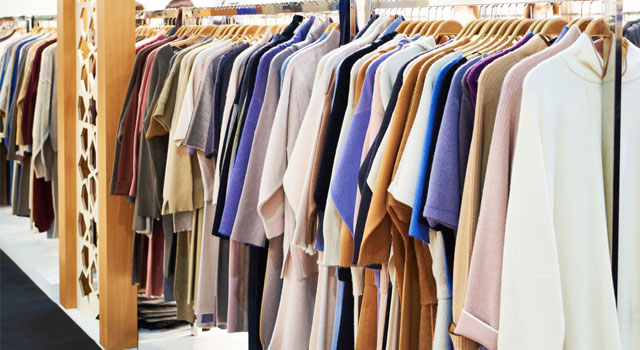
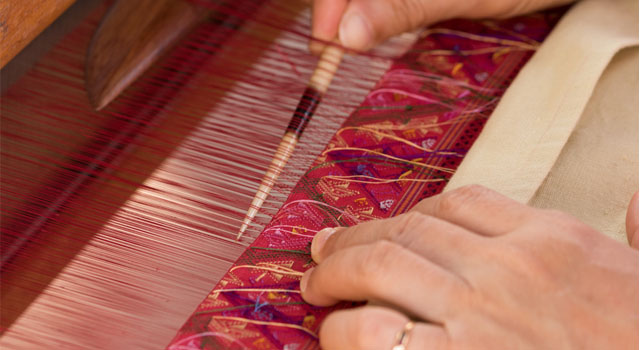
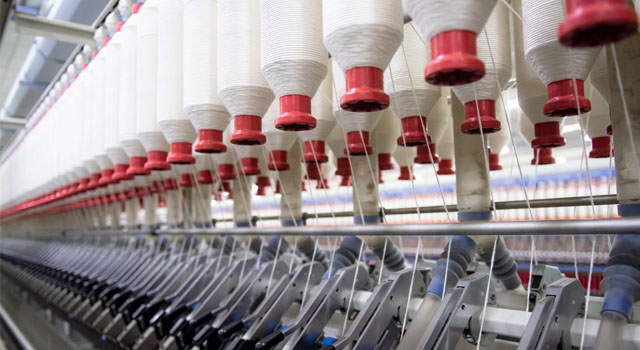

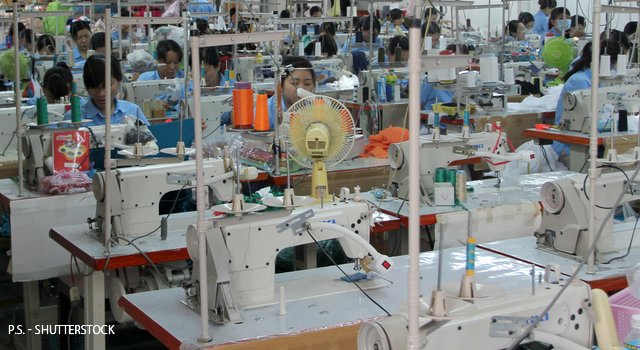
Textile and apparel manufacturing in India, as per the Annual Survey of Industries (ASI) conducted by the Ministry of Statistics & Programme Implementation (MoSPI), shows broad operational stability across States and Union Territories during the period 2019–20 to 2023–24, based on data covering the total number of factories, operational units and other units in the sector. The ASI does not maintain factory closure data separately; units not in operation are classified under the category of “Others”, which includes factories with fixed assets but no production activity for three years, non-existence, de-registration, or those that fall out of survey coverage.
The textile industry remains one of India’s largest employment generators, directly employing over 45 million people. As per the Periodic Labour Force Survey (PLFS), women account for more than 50 per cent of the workforce in the textile and apparel sector, underlining its critical role in inclusive growth and women’s economic participation.
Key trends emerging from ASI data (2019–2023) include:
- At the all-India level, the total number of textile and apparel factories increased from 29,567 in 2019–20 to 31,168 in 2023–24, while operational factories rose from 22,139 to 23,835 during the same period.
- Tamil Nadu, Gujarat, Maharashtra, Uttar Pradesh and Rajasthan continue to dominate the sector, accounting for a significant share of both textile and apparel manufacturing units.
- Uttar Pradesh and Gujarat witnessed a steady increase in apparel manufacturing units, reflecting diversification and expansion in value-added segments.
- Southern states, particularly Tamil Nadu, Karnataka and Andhra Pradesh, maintained a strong base of operational units despite periodic fluctuations during the pandemic years.
- The category of “Others” remained broadly stable at the national level, indicating that while some units were temporarily inactive, large-scale structural exits were not evident in ASI coverage.
To enhance the global competitiveness of India’s textile exports and support MSMEs, the Government continues to engage with industry stakeholders to address key trade and cost barriers. Major initiatives include:
- Trade agreements and market access: India has signed 16 Free Trade Agreements, including India-UK FTA, India-Oman CEPA (December 2025), and recently concluded FTAs with New Zealand and the European Union, providing tariff advantages for textile exports.
- Export credit support: The Interest Subvention for Pre- and Post-Shipment Export Credit under the Export Promotion Mission – NiryatProtsahan aims to improve liquidity and reduce financing costs for MSME exporters.
- Zero-rated exports: The RoSCTL scheme for apparel and made-ups and RoDTEP for other textile products help neutralise embedded taxes and levies.
- Sector-specific schemes: Key initiatives include PM MITRA Parks, PLI Scheme for MMF and Technical Textiles, National Technical Textiles Mission, SAMARTH skilling programme, Silk Samagra-2, National Handloom Development Programme, and National Handicrafts Development Programme.
- MSME support: Schemes such as PMEGP, CGTMSE and PM Vishwakarma further strengthen access to credit, employment generation and enterprise development.
Source: Annual Survey of Industries (E-Sankhyiki Portal), MoSPI.
‘Any premises’ including the precincts thereof: –
- Wherein ten or more workers are working or were working on any day of the preceding twelve months, and in any part of which a manufacturing process is being carried on with the aid of power or is ordinarily so carried on, or,
- Wherein twenty or more workers are working or were working on any day of the preceding twelve months, and in any part of which a manufacturing process is being carried on without the aid of power or is ordinarily so carried on, but does not include a mine subject to the operation of the Mines Act, 1952, or a railway running shed.
The ‘manufacturing process’ referred to above has been defined [vide Section 2(k)] in the Factories Act, 1948 as: ‘Any process’ for
- making, altering, ornamenting, finishing, packing, oiling, washing, cleaning, breaking up, demolishing or otherwise treating or adapting any article or substance with a view to its use, sale, transport, delivery or disposal; or,
- pumping oil, water or sewage; or,
- generating, transforming or transmitting power; or,
- composing types for printing by letter press, lithography, photogravure or other similar process or book binding; or,
- constructing, reconstructing, repairing, refitting, finishing or breaking up ships or vessels; or
- preserving or storing any article in cold storage.
The above definition is slightly modified due to the amendment of the Factories Act, 1948 for the State of Maharashtra and Rajasthan, which is applicable from ASI 2015-2016 onwards and for Goa, which is applicable from ASI 2022-2023 onwards. In addition to the above states, the definition has been modified for ten other states, namely; Andhra Pradesh, Arunachal Pradesh, Assam, Gujarat, Haryana, Jammu & Kashmir, Odisha, Punjab, Tripura, and Uttar Pradesh, which is applicable from ASI 2023-2024 onwards. The amendment section is as follows:
“Section 2m(i) has been modified, i.e., from 10 or more workers with power to 20 or more workers with power and also Section 2m(ii), i.e., from 20 or more workers without power to 40 or more workers without power”.
This information was provided by THE MINISTER OF STATE FOR TEXTILES PABITRA MARGHERITA in a written reply to a question in Rajya Sabha.
Subscribe our WhatsApp Channel FREE to get regular updates – Click here
Enlist your name FREE in Apparel Manufacturers Directory – Click here