




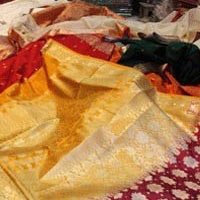
 Benares silk sari, once the prized possession of every Indian woman and an essential item in a bride’s trousseau is quickly losing out in the popularity strakes to trendy, – factory made Chinese weaves. To save it from turning into a museum relic, top twenty four designers from India recently met in the city of Benares in Uttar Pradesh, along with top officials from textiles ministry, to brainstorm on how to reinvent the fabric.
Apart from providing weavers with design ideas, the designers have promised to base their next collections on the textile. The new collaboration will lead to a new product line that will be showcased in India before it is promoted abroad.
Over the past couple of decades, Benares silk has become starchy, stiff and overdecorated – in other words, uncomfortable to wear. The real decline began after the weavers, hoping to appeal to new customers, moved away from the beautiful motifs and patterns that the fabric is famous for, and began adding cheap embellishments.
Consumers began buying silk saris imported from China, which are cheaper than traditional weaves and come in a variety of new designs and colours.
They replaced the yarn that used to produce a soft, flowing fabric, and ended up with something stiff, fashion designer, Ritu Kumar said. They have stopped using real gold thread because it was too expensive, but opted instead for a bright-yellow substitute which looked awful and made the sari even stiffer.
Tarun Tahiliani, Neeta Lulla, J J Valaya, Anamika Khanna, Wendell Rodricks and Rohit Bal are among the designers expected to offer ideas based on market demands, helping weavers revamp Benares silk so that it remains relevant to contemporary women. This also means producing a sari that is light, drapes well, and can be worn every day.


