
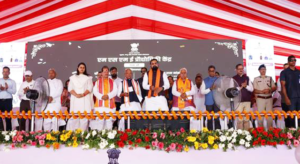



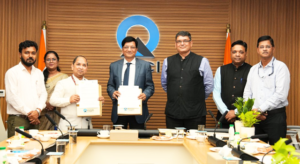




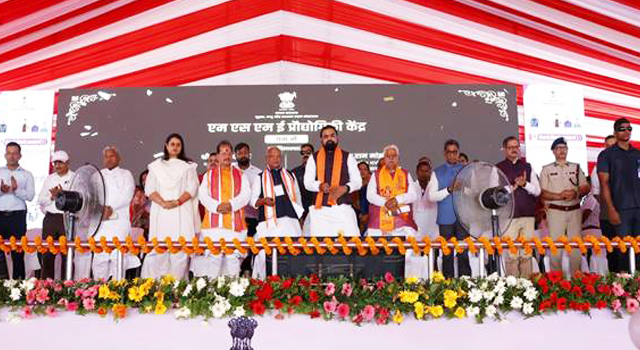

Sustainability is non-negotiable in India’s growth story, Union Minister of Commerce and Industry Piyush Goyal affirmed while inaugurating the International Electrotechnical Commission (IEC) General Meeting Exhibition, organized by the Bureau of Indian Standards (BIS). He emphasized that sustainability is not merely a policy direction for India but a value deeply ingrained in its traditions and culture. Every Indian, he said, is brought up with respect for nature and an instinctive belief in living in harmony with the environment, making sustainability a way of life rather than an external compulsion.
The Minister observed that India remains keen to learn from the developed world, especially from the adoption of high-quality standards that have enabled many economies to grow, innovate, and prosper. He stressed that such standards are not just technical benchmarks but also critical drivers of growth. For India, now the fastest-growing large economy, aligning with global best practices in quality and sustainability ensures competitiveness, resilience, and global credibility.
Goyal noted that international platforms like the IEC General Meeting are invaluable for exchanging ideas, systems, and practices that help countries collectively develop high-quality standards. Such collaboration, he said, goes beyond harmonizing minimum practices—it builds trust, creates stronger cooperation between nations, and opens up fresh opportunities for trade and innovation. For a country like India, strong and harmonized standards form the backbone of development and play a dual role in advancing both domestic growth and international progress.
Harmonized standards, the Minister added, are key to enhancing product quality, boosting consumer confidence, and reducing trade barriers. They facilitate open markets, encourage free and fair trade, and create a level playing field for businesses worldwide. Referring to the presence of international experts at the IEC General Meeting, he expressed confidence that their deliberations—particularly given their engineering expertise—would enrich the global conversation and lead to wider adoption of standards. Such efforts, he emphasized, are vital to sustaining consumer welfare, driving demand, and ensuring long-term prosperity.
Reiterating India’s commitment to global climate action, Goyal highlighted the nation’s progress on its nationally determined contributions under the Paris Agreement. He noted that India acts not out of external pressure but as a responsible global citizen with deep conviction in sustainability. Central to India’s development strategy are principles of the circular economy—reducing waste, conserving resources, and promoting efficiency—which he described as pillars of future growth.
The Minister underscored that India has thousands of technical committees actively engaged in setting standards across sectors. While earlier these were mostly voluntary, experience has shown the need for stricter adherence. Quality Control Orders (QCOs), he said, have transformed industries—citing the example of toys, where enforcement of standards eliminated substandard imports, encouraged quality domestic production, and ensured child safety.
He clarified that quality does not increase costs; rather, it cuts waste, improves efficiency, and enhances consumer trust. Standards, therefore, must be viewed as strategic tools not only for consumer satisfaction and competitiveness but also for addressing climate challenges. Linking this to India’s heritage, he recalled Chanakya’s Arthashastra, which outlined fair measures, liability for traders, and penalties for malpractice—proof that quality and consumer rights have long been part of India’s ethos.
Referring to Prime Minister Narendra Modi’s vision of “Zero Defect, Zero Effect,” Goyal said the government is working in mission mode to embed quality and sustainability into every sector. This dual approach ensures flawless products while minimizing environmental impact. He stressed that India is building a modern quality ecosystem that will soon make “Design in India, Made in India” a globally trusted symbol of reliability, sustainability, and excellence.
He also underlined the growing role of the electrical and electronic industry in driving energy efficiency and supporting India’s sustainability goals. As the country transitions towards advanced electronic solutions, the sector can significantly reduce energy consumption, cut pollution, and strengthen climate action, while delivering high-quality products to consumers.
Concluding his address, Goyal urged the global community to unite in building a standardized, safe, and sustainable future—one where harmonized standards not only drive economic growth but also protect consumers and preserve the planet for generations to come.
Subscribe our WhatsApp Channel FREE to get regular updates – Click here
Enlist your name FREE in Apparel Manufacturers Directory – Click here