









Pioneers in Sustainable Textile Manufacturing: The Journey of Rudra Ecovation Ltd
Ludhiana-based Rudra Ecovation Ltd, formerly known as Himachal Fibres Ltd, stands today as a trailblazer in sustainable textile manufacturing and one of Asia’s largest vertically integrated facilities recycling rPET bottles. With an impressive capacity to transform over 8.8 million bottles per day into flakes, fibres, yarns, knitted, and nonwoven fabrics—all under one roof—the company has redefined eco-friendly production in textiles. Its sustainable fabrics are marketed under the flagship brand Anaura, reflecting innovation and environmental responsibility.
From Spare Parts to Spinning – A Legacy of Ingenuity
The company’s roots trace back to 1969, when B.K. Malhotra, a textile graduate, began manufacturing textile spare parts and machinery. His son Akhil Malhotra, the current CMD, joined him to expand into spinning in 1997 under the name Shiva Texfab, beginning modestly with 800 spindles for wool processing. As the industry evolved, the Malhotras pivoted to acrylic yarns, driven by changing market dynamics. Their innovative approach turned imported acrylic waste into yarns, blending virgin and regenerated fibres—a move that expanded the spindle capacity to 25,000 by 2006.
Strategic Expansion and Diversification
The early 2000s brought both opportunity and adversity. As a recession hit the textile industry in 2006, Rudra Ecovation saw potential where others saw risk. The company acquired six spinning mills, expanding to 200,000 spindles and diversifying into polyester, cotton, and specialty yarns. Advanced fibre and yarn dyeing units were also established, setting the stage for greater vertical integration.
The Turning Point – PET Bottle Recycling Revolution
A major breakthrough came in 2007, when Malhotra’s visit to China exposed him to the possibilities of recycling post-consumer PET bottles into polyester fibres. Inspired, he returned to India and spearheaded the development of an indigenous PET recycling plant, with support from Chinese and German experts. By 2009, Rudra Ecovation had commissioned two PET recycling plants, producing high-tenacity recycled polyester fibres comparable to virgin PSF—a first in India. Within a year, production expanded to five recycling lines with a capacity of 125 tons per day.
Resilience Amid Economic Challenges
The company’s journey was not without obstacles. The 2014 crude oil price crash caused recycled PSF prices to plummet, leading to substantial industry losses. Yet Rudra Ecovation weathered the storm with integrity—settling debts, avoiding defaults, and restructuring operations. By 2019, all liabilities were cleared, allowing the company to rebuild stronger than ever.
Technological Excellence and Modern Yarn Production
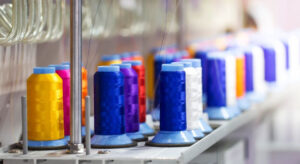
Retaining 70,000 high-tech spindles, Rudra Ecovation continued producing blended yarns (8’s–60’s count) by combining recycled PSF fibres with Lyocell, nylon, rayon, and viscose. The facility, equipped with Rieter, LMW, Savio, and Schlaforst technology, maintains a production capacity of 60 tons per day, reflecting a balance between quality, innovation, and sustainability.
Forward Integration into Knitting and Dyeing
After 2019, Rudra Ecovation expanded into knitted fabrics, installing 200 knitting machines from Mayer & Cie and others, producing fabrics ranging from 80–600 GSM. In 2024, it launched an advanced fabric dyeing unit, delivering 320,000 sq. metres per day with eco-friendly finishes like wicking, antimicrobial, fire-retardant, and waterproof properties. The addition of a needle-punch nonwoven line for automotive and acoustic applications strengthened its sustainable product portfolio.
Sustainability at the Core
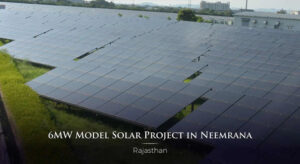
Rudra Ecovation’s commitment to the environment is reinforced by certifications such as GRS, BIS, ISO 9001:2015, ISO 16603:2004, Hill-Bound Certification, and OBP (Ocean Bound Plastic). The company uses Oeko-Tex certified dyes, operates a zero-discharge effluent treatment plant, and is investing in a 20 MW solar power plant to meet half its energy needs. Its adoption of dope dyeing technology aims to eliminate water and chemical usage, advancing a truly pollution-free production model.
Global Recognition and Future Vision
Today, Rudra Ecovation’s sustainable fabrics are showcased at leading international exhibitions and chosen by global brands such as Shell and Ferrari. The company is now expanding partnerships with the airline, hospitality, and automotive sectors, all seeking greener sourcing options. Looking forward, Rudra Ecovation plans to expand its fabric processing capacity, merge operations with Shiva Texfab, and enhance production efficiency.
However, Malhotra warns of unfair trade practices from under-invoiced Chinese fabric imports, urging policy intervention to protect domestic manufacturers. Despite these challenges, Rudra Ecovation continues to stand as a beacon of sustainability, innovation, and resilience, proving that responsible manufacturing can indeed drive industrial and environmental progress hand in hand.
Subscribe our WhatsApp Channel FREE to get regular updates – Click here
Enlist your name FREE in Apparel Manufacturers Directory – Click here