





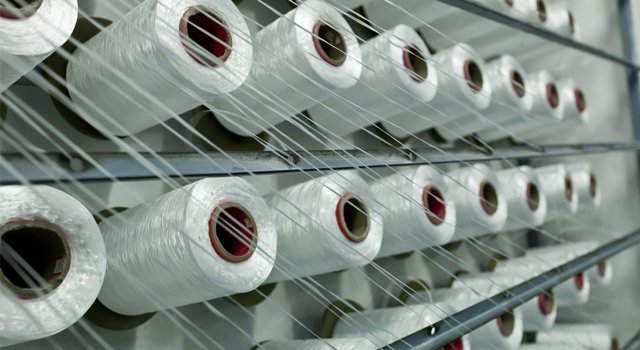

Spinning mills remain central to India’s textile value chain, and the Ministry of Textiles has reiterated the Government’s continued commitment to strengthening the spinning sector, even as State/UT-wise data on spinning mills was placed before Parliament.
In a written reply to a question in the Rajya Sabha, Union Minister of State for Textiles, Pabitra Margherita, shared details based on the Annual Survey of Industries (ASI) conducted by the Ministry of Statistics & Programme Implementation (MoSPI). The data pertains to units under “Preparation and Spinning of Textile Fibres (NIC 1311)” and covers the period from 2019-20 to 2023-24.
The Minister clarified that while the ASI provides information on the total number of factories, factories in operation and ‘other’ units, specific data on closures of spinning mills is not maintained separately by the Ministry.
Key Highlights from ASI Data (2019-20 to 2023-24)
- At the all-India level, the total number of spinning mills stood at 5,373 in 2019-20 and 5,166 in 2023-24.
- Operational mills declined from 3,979 in 2019-20 to 3,702 in 2023-24.
- Units classified as “Others” — which include factories with fixed assets but no production for three years, non-existence, de-registration or out-of-coverage units — stood at 1,464 in 2023-24.
- Tamil Nadu continued to account for the highest number of spinning mills in the country, followed by states such as Maharashtra, Gujarat, Punjab, and Rajasthan.
- The data covers factories registered under Sections 2(m)(i) and 2(m)(ii) of the Factories Act, 1948, which form the core of the ASI’s factory sector coverage.
The Government emphasized that multiple policy interventions are being implemented to address structural challenges in the spinning industry, including modernization needs, raw material price volatility, infrastructure gaps and skill shortages.
Key Government Initiatives Supporting Spinning Mills
1. Technology Upgradation and Modernization
- Amended Technology Upgradation Fund Scheme (ATUFS): Provides credit-linked Capital Investment Subsidy (CIS) to textile units for benchmarked machinery purchases, enabling modernization and improved environmental performance.
- State-Level Modernization Schemes: Certain states, including Tamil Nadu, offer interest subsidies for replacement of machinery older than five years.
- Mini Textile Park Schemes: Support smaller units through subsidies for infrastructure development, buildings and machinery.
2. Raw Material Supply and Price Stabilization
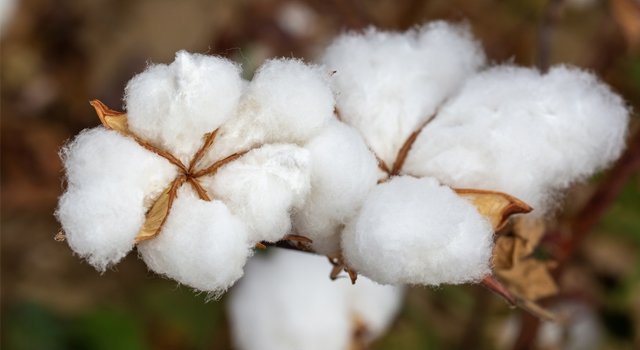
- Cotton Corporation of India (CCI) Support: The Government directs Cotton Corporation of India to sell cotton stocks procured under Minimum Support Price (MSP) operations directly to MSME-category spinning mills to ensure timely availability.
- Special Sales and Discounts: CCI provides discounts, such as Rs. 300 per candy, to MSME spinning mills, cooperative sector mills and Khadi institutions to enhance competitiveness.
- Yarn Supply Scheme (YSS): Ensures availability of yarn at mill gate prices to handloom weavers, thereby sustaining consistent demand for spinning mills.
- Kasturi Cotton Initiative: Focuses on branding, traceability and certification to promote high-quality Indian cotton across the supply chain.
3. Financial Assistance and Export Incentives
- Production Linked Incentive (PLI) Scheme: Encourages production of high-value Man-Made Fibre (MMF) fabrics and technical textiles, attracting investment and promoting advanced manufacturing.
- Rebate of State and Central Taxes and Levies (RoSCTL): Provides tax rebates on exported garments and made-ups, indirectly strengthening downstream yarn demand.
- Interest Equalization Scheme: Offers enhanced interest equalization on pre- and post-shipment credit for MSME exporters.
- Special Package for Textiles (2016): Included additional subsidies under ATUFS, EPF contribution support and tax concessions to boost sector competitiveness.
4. Infrastructure and Skill Development
- PM MITRA Parks: Seven Mega Integrated Textile Region and Apparel Parks are being established to provide world-class plug-and-play infrastructure and reduce logistics costs.
- Integrated Processing Development Scheme (IPDS): Supports establishment and upgradation of Common Effluent Treatment Plants (CETPs) to ensure environmental compliance.
- SAMARTH (Scheme for Capacity Building in Textile Sector): Provides demand-driven and placement-oriented training to create a skilled workforce for the textile value chain.
The Government stated that these measures collectively aim to strengthen technological capabilities, ensure raw material availability, stabilize input costs, promote exports, and build integrated textile ecosystems.
The reply in the Rajya Sabha underscores the Centre’s continued focus on making India’s spinning and textile sector more resilient, competitive and globally integrated while supporting employment generation across states.