






The Government has undertaken comprehensive measures to ensure adequate availability of cotton for the domestic textile and spinning industry, while safeguarding farmers’ interests and improving productivity through research-driven interventions.
Replying to a question in the Rajya Sabha, Minister of State for Textiles Pabitra Margherita outlined the key initiatives being implemented.
MSP Operations and Transparent Cotton Sales
The Cotton Corporation of India (CCI) serves as the central nodal agency for procurement of seed cotton (kapas) under the Minimum Support Price (MSP) mechanism. MSP for cotton is declared annually to protect farmers from distress sales when market prices fall below the prescribed benchmark. This ensures remunerative returns to farmers and sustains cotton cultivation across major producing states.
Cotton procured under MSP operations is subsequently released to domestic textile and spinning mills through a transparent online e-auction system. This mechanism enables competitive price discovery and fair access to raw material for industry players. By balancing procurement and market release, the Government ensures price stability, adequate supply to industry, and income security for farmers.
Five-Year Mission for Cotton Productivity
To further strengthen cotton production, a five-year Mission for Cotton Productivity has been announced in the Union Budget 2025–26. The Department of Agricultural Research & Education is the nodal department for the Mission, with the Ministry of Textiles as a key partner.
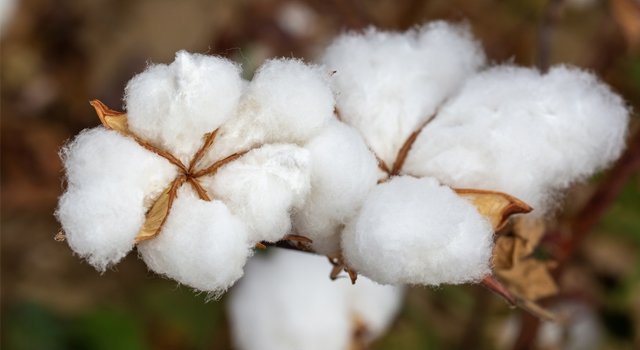
The Mission focuses on boosting productivity through research, innovation and extension services. It aims to develop climate-resilient, pest-resistant and high-yielding cotton varieties, including Extra Long Staple (ELS) cotton, using advanced breeding and biotechnology tools. The initiative also seeks to promote improved agronomic practices and scientific interventions at the field level. By enhancing yield and quality, the Mission is expected to improve farmer incomes and reduce India’s dependence on cotton imports, particularly of premium varieties.
Special Project on Cotton under NFSM
In convergence with the Ministry of Textiles, the Ministry of Agriculture & Farmers’ Welfare has been implementing a Special Project on Cotton under the National Food Security Mission (NFSM) since 2023–24 through ICAR–CICR, Nagpur.
During 2023–24, an outlay of ₹41.87 crore covered 9,175 hectares across eight states. In 2024–25, ₹5,097.88 lakh covered approximately 14,740 hectares. The interventions resulted in yield gains of 40 per cent under the High Density Planting System (HDPS) and over 32 per cent under closer spacing methods. Encouraged by these results, the project has been extended to 2025–26 with an outlay of ₹6,032.35 lakh, including committed liabilities. The project emphasizes quality seed distribution, scientific crop management, and field demonstrations to promote best practices.
Expansion of Procurement Infrastructure
To ensure effective implementation of MSP operations, CCI has significantly expanded its procurement network. The number of procurement centres has increased from 508 in 2024–25 to 571 in 2025–26, covering 150 districts across 11 cotton-growing states. This expansion enhances accessibility for farmers and ensures timely procurement.
During the 2024–25 cotton season, CCI procured 100.16 lakh bales valued at ₹37,437 crore. In the ongoing 2025–26 season (as on 05.02.2026), 90.97 lakh bales valued at ₹36,355 crore have been procured, reflecting robust operational outreach.
Production, Consumption and Stock Position
As per provisional data from the Committee on COCPC meeting held on 08.12.2025, total cotton supply stood at 390.68 lakh bales in 2022–23, 401.58 lakh bales in 2023–24, 386.11 lakh bales in 2024–25 (P), and 377.65 lakh bales in 2025–26 (P). Total demand during the same period was 329.52 lakh bales, 354.11 lakh bales, 340.61 lakh bales (P), and 337.00 lakh bales (P), respectively. Closing stocks were maintained at 61.16 lakh bales in 2022–23, 47.47 lakh bales in 2023–24, 45.50 lakh bales in 2024–25 (P), and 40.65 lakh bales in 2025–26 (P), indicating a balanced supply-demand position.
The Government’s integrated approach aims to secure farmer welfare, enhance productivity, ensure stable raw material supply to the textile industry, and strengthen India’s competitiveness in the global cotton economy.
Subscribe our WhatsApp Channel FREE to get regular updates – Click here
Enlist your name FREE in Apparel Manufacturers Directory – Click here

