










The Indian textile industry, a cornerstone of the nation’s exports, is reeling under severe pressure following the imposition of new US tariffs. This development has created a wave of uncertainty among exporters, who are now urgently exploring ways to safeguard their businesses and workforce.
Immediate Impact on Export Orders
The new tariffs have left exporters in a fix about how to handle both current and upcoming orders. Many companies are in emergency meetings with their management teams, trying to chart a path forward. The uncertainty is not only about profitability but also about the viability of keeping factories running at full capacity.
As Vijay Agarwal, Chairman of the Cotton Textiles Export Promotion Council, explained, “Our biggest worry is about the expected job loss, which is likely to be about half a million including direct and indirect employment. We are worried about what work we will do at our factories.”
Fear of Job Losses
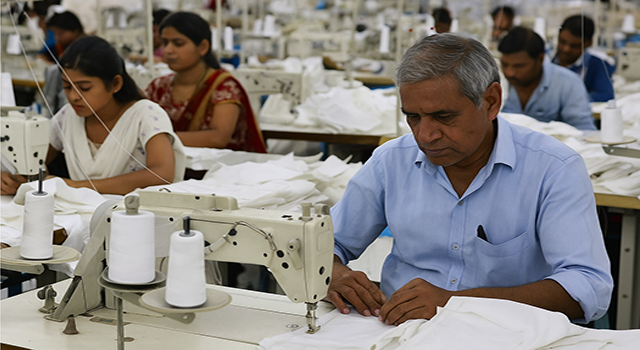
The industry employs millions of workers, many of them from rural areas and small towns. With margins shrinking and competitiveness threatened, exporters fear significant layoffs. This is a pressing concern, as job losses could ripple into local economies dependent on textile clusters across India, from Tirupur to Surat.
Exporters Head to the US for Negotiations
Several top industry players are traveling to the US this week to renegotiate with buyers. Their goal is to find middle ground on pricing and avoid outright cancellations. However, as buyers push for steep discounts, exporters are finding it nearly impossible to meet demands without jeopardizing their own survival.
Vijay Agarwal, who is also Chairman of Creative Group, confirmed that he will be flying to the US for talks. He added that exporters expect the Indian government to step in, particularly by advising banks not to penalize exporters for delays in repaying debt and interest obligations during this crisis.
Exploring Alternative Markets
While the US remains a major destination for Indian apparel, exporters are being forced to explore other regions. Markets in Europe, the Middle East, and even Africa are being considered as potential buffers against the loss of US business. However, building new buyer relationships takes time, and in a competitive global environment, India faces stiff competition from China, Bangladesh, Vietnam, and Cambodia.
Competitive Disadvantage
Raja Shanmugam, former president of the Tirupur Exporters Association, pointed out the fundamental challenge: “It would be difficult for Indian exporters to compete with those from nations like China, Bangladesh, Vietnam and Cambodia, who face a much lesser US duty. The US buyers had asked us to negotiate on pricing and give discounts. It is an impossible task for us. There is a huge uncertainty now.”
This disparity makes it harder for Indian exporters to maintain their market share, and risks long-term erosion of India’s position in global trade.
Ratings Outlook and Industry Forecast
Crisil Ratings has already projected that revenue growth for readymade garment manufacturers will halve due to the tariffs. Such a sharp slowdown will strain balance sheets, delay investment plans, and curb expansion ambitions across the sector.
Call for Government Support
In light of the crisis, exporters are appealing to the government for urgent interventions. This includes financial relief, softer repayment terms, export incentives, and accelerated policy measures to support market diversification. Without this backing, the industry fears the crisis could deepen into long-lasting damage.
Subscribe our WhatsApp Channel FREE to get regular updates – Click here
Enlist your name FREE in Apparel Manufacturers Directory – Click here