












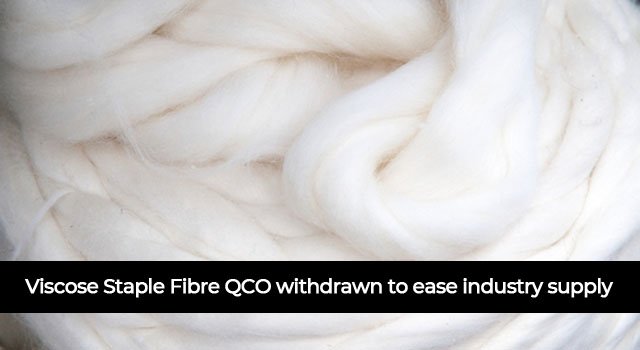
In a significant move aimed at strengthening raw material availability and supporting long-term growth in the textile value chain, the Central Government has officially withdrawn the Quality Control Order (QCO) for Viscose Staple Fibre (VSF) with immediate effect. The decision follows extensive consultations with the Bureau of Indian Standards (BIS), leading textile associations, major manufacturers, and MSME stakeholders who had consistently highlighted the challenges arising from the QCO mandate. For months, the industry had voiced concern that the QCO was creating supply bottlenecks, extending lead times, and increasing production costs—particularly for small and medium-sized enterprises that rely heavily on imported or diversified grades of viscose fibre. By removing the compliance requirement, the government has signaled its responsiveness to the industry’s feedback and its broader commitment to simplifying regulatory processes.
This policy shift comes at an especially important moment for India’s textile and apparel ecosystem, which is aligning itself with the national Vision 2030 roadmap. The goal is to unlock higher domestic consumption, push exports beyond the $100 billion mark, and expand the combined textiles and apparel market to an estimated $350 billion. Achieving these ambitious targets requires uninterrupted access to raw materials, competitive pricing, and a regulatory environment that supports both innovation and scalability. The revocation of the QCO on VSF is expected to directly contribute to these objectives by easing procurement challenges and enabling manufacturers to source the fibre more freely based on evolving global trends, cost efficiency, and product-specific needs.
With better access to viscose fibre—one of the most versatile and widely used materials in apparel, home textiles, and technical textiles—producers can now maintain production continuity without risk of shortages or certification-related delays. This is likely to improve cost structures, strengthen export competitiveness, and encourage capacity expansion across spinning, weaving, knitting, and garmenting segments., which make up a substantial portion of the textile value chain, stand to gain the most as they will face fewer compliance barriers and enjoy improved flexibility in sourcing from both domestic suppliers and international markets.
Beyond easing supply chain constraints, the government’s decision reinforces its larger strategy of making India a preferred global manufacturing hub. A stable and supportive policy landscape is essential to attract long-term investments, accelerate technology adoption, and build future-ready capabilities. The Ministry has reiterated its commitment to continuing dialogue with the industry to ensure that policy decisions remain grounded in data, global market trends, and sector-specific needs. This approach is expected to help maintain momentum in domestic manufacturing, support job creation across labour-intensive segments, and position India as a more influential player in the global textile economy. Overall, the withdrawal of the QCO for VSF marks a proactive, industry-friendly measure that aligns with the nation’s growth vision. By enabling seamless material access and fostering a more conducive business environment, the government has taken a meaningful step toward accelerating India’s progress toward becoming a leading global textile and apparel powerhouse.
Subscribe our WhatsApp Channel FREE to get regular updates – Click here
Enlist your name FREE in Apparel Manufacturers Directory – Click here